
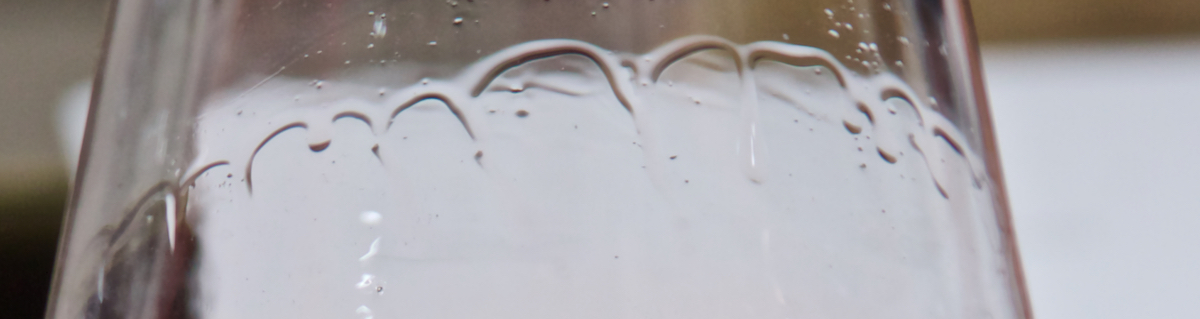
Legs / Tears - Why you should never mention them
Legs. The very thought of legs in the context of wine conjures up the image of swirling glasses in a sea of tuxedo clad men (yes men, but that is another lecture). Oohs and ahs fill the air as each examines the legs of the wine, those streaks on the glass that the French so poetically dub "Tears". A whirlwind of terms like "Body" and "Glycerine" circles the august body, and all agree, on the prophecy of these rivulets of wine alone, that this is indeed a fine wine.
The scene is a compelling one, reeking of upper class and privilege. While even the most ardent anti wine snob tries to keep it buried, there is more often than not, a glimmer of this sense of exclusivity while they engage in their passion.
It is for this reason more than any other that the myth of legs as an indicator of wine's quality continues to exist, further aggravated by the greater myth that it is linked to the amount of glycerin in the wine. It is not uncommon for those teaching about wine to propagate this myth. Many believe the truth of it, but a few sin against the world of wine because they know better but are simply too lazy to correct the misconception.
Legs are a product of the simple fact that alcohol (ethanol) in wine, evaporates more quickly than water. This is called the Marangoni effects. The alcohol crawls up the glass as it evaporates, but since there is a film of water on top, it is pushed up in an arch. Eventually gravity wins, the water's surface tension is broken, and down runs the water, in tears.
The more alcohol, the more legs. While this would seem to be a handy indicator in a blind tasting, in fact the percentage of alcohol needed to notice a difference is so great that it would be the difference between a table wine and a fortified wine. It is unlikely that the legs would be necessary to help you tell these two wines apart.
As to Glycerin. First and foremost there is no glycerin in wine. Glycerin is a syrup that you buy at the drug store. Glycerol is the correct term, and it is an alcohol. The amount in wine is very small, and while it contributes to sweetness, it does not contribute to body. Further glycerol has a boiling point of 290C (554F) so the amount of vapor pressure above a glass of wine at room temperature is almost nil.
While the imagery and poetry of these tears of wine is overpowering, it is in fact not a test of body, nor due to glycerin (nor glycerol). While it is a test of alcohol level, it is a redundant observation and so is in no way useful in evaluating the quality of wine.
Copyright WineEducation.com
Do not reprint without permission